Art of Proprietation

Saturday, February 12, 2011

Routines

I like having a cook stove in the kitchen. We have an antique glenwood, maybe an A model. It's pretty basic, fire box on the left, draft goes over the oven, down the right side, under the oven and up the back of the stove to the damper. With decent wood, it's easy to get 500 degrees F in the oven. The surface of the stove is hot enough that we use firebricks with an 2" air gap to have a warming area. I usually keep a baking stone in the oven. It's convenient, with that kind of heat sitting around in the kitchen it's easy to warm up leftovers in a skillet, make a toasted sandwich on the baking stone, etc. All that hot cast iron holds a lot of energy at the ready.

The Glennwood keeps our part of the house warm all winter. We do have a radiant floor in the bathroom, but that comes off the trap room, so it has no air flow from the kitchen. The stove doesn't run for much more than an hour untended, so things cool off by morning. But the house is comfortable for us.

It takes some doing to orchestrate it, though. Last spring, I was collecting trees and cutting wood. The tree crew for the power lines came through. Because I was available, they were more aggressive about the size trees they cut. One of the guys said he dropped his largest diameter tree yet that day. Me being there with the tractor meant they only had to get the tree down and they could drop it in the road. They would normally have to cut up the down wood. For me, they left it in the largest pieces I could take away. That made it easier for me, less handwork than picking up a lot of small pieces. It also means it's cut up the way I like it for my stove. One of my neighbors also had several trees come down. It's their second home, so they don't have much want or need for the wood and were happy to have it disappear. Between those two sources, I have at least two years worth of wood.

I like to minimally split my wood for seasoning and wait until later to split it down to kitchen wood. I am will have to handle it a couple of times to get it into the house wood shed, so keeping it in large pieces means I don't have to handle so many. In the fall I brought down this years wood to the house and stacked it in a stock panel wood shed. Now, I go out to woodshed daily and split a bunch of big chunks into kitchen wood.

We use five gallon buckets to manage wood from the shed into the kitchen. There is a rack near the stove for four buckets. The buckets catch the falling wood detritus and melting snow, etc. They are also a handy measure. Depending on the wood quality and how it's split, five to eight buckets of wood feed the stove all day.

The Glenwood has a satisfying number of controls. It loads through the eyes on top. There are two draft controls on the fire box, a lever for the diverter to send the flu gasses around the oven, a slider damper on the back of the stove and a damper in the round stovepipe above the stove. Each has it's own particular metal clank, thud, scrape or squeal. They are often uncomfortably hot to touch and I use the stove iron to hook or push them. There is an oven door temperature indicator and a flu thermometer. I can hear the draft and the tone of the fire. Standing near the stove I can feel if the fire is ebbing and the stove is cooling off. It is not unlike running an old engine that is adjusted with nudges, done by feel and confirmed by listening.

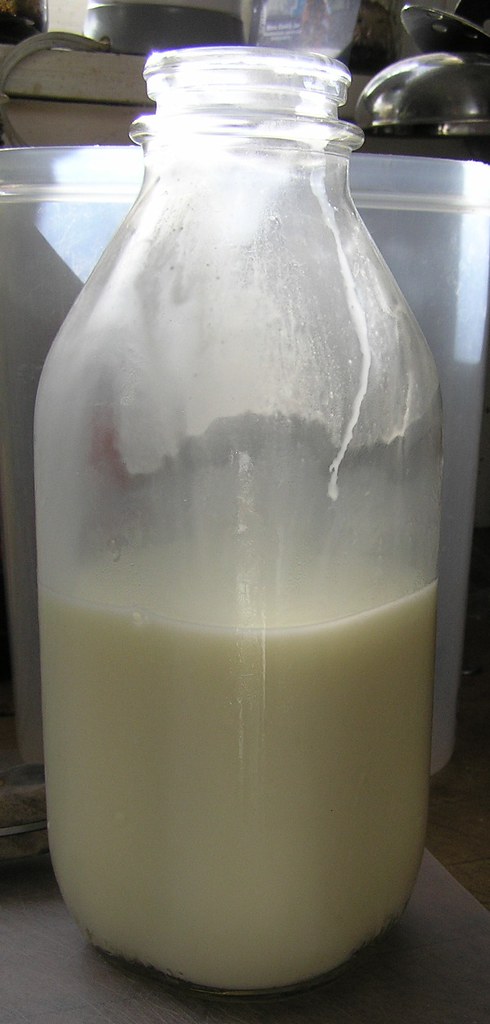
I have a routine in the morning. Up and start the fire while I make the boy something to eat. Bring in the milk cooler that skimmed over with ice overnight. Fill water buckets for the animals while the coffee steeps. Keep an eye on the stove. As the kindling warms to flu, watch for the flu to come up to temp and shift the diverter around the oven when it is drawing sufficient. Put in some small square wood that will catch easialy edge the fire up. Take empty wood buckets out to the shed on the way to the animals. Feed and water the goats. Loose the chickens and put out their grain. Bring the water buckets back to the trap room and check the fire. Put in some larger wood and set the draft for heat. Out to the woodshed, split and fill the buckets until the rack in the kitchen is full. Wash up and head out to milk. Don't forget a black coffee to make a goat latte with milk straight from the teat. Measure out the grain. Bring out Sparque who is always in a rush. Milk Heddar. Drink coffee. Relax a minute, watch the goats. Deal with any animal issues that show themselves. Put out more hay. The milk has been air chilling at these temps just hanging in the milking shed any way. Back in with the milk. Check the fire. Filter the milk into quart bottles and on into the ice bath to chill. Refill the kitchen wood buckets that got used and cut kindling for tomorrow's fire. Stop lallygagging and get to the days work.

Labels: , ,

Monday, January 24, 2011

Cold, Cold, Cold

I waited for things to warm up this morning before I went out to milk. It was twenty one degrees below zero Fahrenheit when I did milk.

Milk pails have a have a habit of reminding me of the temperature while I am out there.
At about ten degrees, stainless steel on bare hands gets cold quick.
At about five degrees, there's a momentary adhesion as any surface moisture flash freezes to the pail's handle.
At negative twenty, there's a little epidermis left behind stuck to the handle when the hand is pulled off.

This morning, there was hoar frost in the hair of the goats when they came into the milking parlor. The milk parlor is just an unheated shed off the back of the barn, so it is not like it is warm, though.

The upside of cold weather like this, it's real dry. I can walk around outside in wool socks and my crocks as long as I stick to the packed paths. I think the crocks are just as warm as my rubber boots in this situation. In March, it will warm up and be much too wet and cold for crocks.

Labels: , , ,

Monday, December 06, 2010

What I like about goats

We've been keeping goats for coming up on four years now. I don't consider myself an authority on goats, but I have had a chance to learn if I like them.

I got goats because I wanted a secure source of milk that I confidence in. I chose goats over cows milk because I liked the human scale of goats. A typical milking doe weighs in at 120 - 200 lbs. As a friend of mine is want to say, "When a cow kicks you, you stay kicked". There's also the issue of goat tough. Building to the international standard "goat tough" is a lot cheaper than building for "cow tough" certifiaction. It didn't hurt that I was offered a Saanen doe that I was sure of to get started with. Saanens are a large breed dairy goat and I knew the doe I was getting was a good producer because I had been milking her for close to a year at a friend's.

I find goats to have personalities similar to dogs. Friendly dogs. They seek human attention and are easy to train to routines. They can be skittish, but not hard win back over.

I have had challenges in keeping goats. I started from scratch, I didn't have any fencing or housing, I didn't even have that much grass. I chose to go with a high tension smooth wire fencing for their first paddock. While that might be handy for training a new goat to electric fence, but I now think those five wires are over kill. I have been quite successful keeping them behind three flimsy poly wires strands for most of the season. I am trying to do rotational grazing, something I am growing into. Since my first season, I have continuously expanded our pasture areas and I am able to feed them for about six months a year on pasture. For the remainder of the year, I have to buy in hay. The steady expansion of our pastures means that even though we have grown from two animals to 7, our hay costs have been pretty steady. I do face a dilemma about grain though. I haven't found a ready source of organic that I feel I can afford, so I am using a conventional grain to supplement the hay for milking animals. For housing, I didn't want to have something permanent. I didn't want to have lazy barn goats or the parasites and health problems go with them. I have found that goats do just fine in our cold snowy winters with three sided stock panel structures. And there are enough health risks to worry about, making sure the goats have access to minerals, don't carry a heavy parasite load and don't succumb to something like Johnnes or CAE. As big as anything is the daily grind of milking. My wife or I have to milk goats everyday if we are going to keep the goats in production. Because of that, we have only been away overnight together once since we got goats. My final challenge is breeding. I have found only one other Saanen breeder in my area. For some complicated reasons I have chosen to stick with purebred goats, but I am not a big enough operation to carry a buck for breeding. For the time being, I am lucky the one farm close enough is willing to provide stud service for us.

So, after all that, why would I keep goats? Primarily Daily milk. Before I got goats, I was buying three or four gallons of milk each week. I consume a lot of milk, it's an important part of my diet and always has been. Now that I have goats, I also have milk to make cheese with. On a weekly basis, I make chevre, my wife makes a nice mozzarella and quaso blanco. And this year I have started making a Gouda. There is also meat, an inevitable by product of lactation. We can't keep all the offspring created by freshening our goats for milk. Bucklings just don't have much use, and there will come a time when we can't keep all the doelings. On farm slaughter has meant that we also get a small amount of meat from our goats. Then there is the compost. Sure, everybody poops, but not every bodies poop is equal. Goat poop is ready to go from day one. It is nearly perfectly balanced Nitrogen Carbon. And with brush control like goats, I doubt I'll ever need to put a rear mower behind my tractor. Goats clear out many aggressive species like sumac and raspberry. And they love Japanese knot weed and honeysuckle.

I enjoy my goats. They are affectionate and likeable. I enjoy the work and the fruits of my labor. Even early morning milkings in the field are pleasant. There is something refreshing about a goat latte right from the teat on a crisp morning before the mist has cleared.

Labels: , , , , , ,

Sunday, July 04, 2010

Tilt'n back a couple of pints

100704117 Milk pint resized

It's been a very busy spring. Bottle kids on top of extra kids. We have twice as much ground planted. We have maxed out on daily chores with the new animals and farmer's markets. We have been working at learning to work smarter instead of harder, but finesse comes with experience and it's tough to learn much without making a mistep here and there.

But as the kids get older, our efforts are beginning to bare fruit. Literal fruit in the garden, Fruit of our labors with the goats. We had gyros from last year's bucks this weekend. And there is enough milk in the house for drinking again.

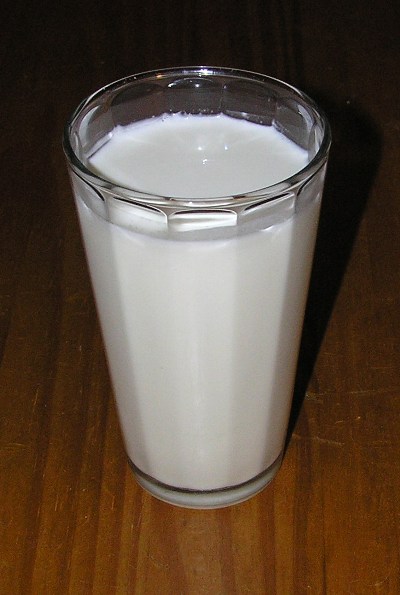
It's nice to be able to tip back a pint or two in the evening.

Labels: , ,

Wednesday, January 13, 2010

Flat on my back

I was flat on my back for a while. My wife hurt hers maybe two weeks earlier. Nothing dramatic, I leaned too far out lifting the ice chains onto the tractor wheel. A strain. But it hasn't been fun. And I am getting to try out the insurance I have been paying for all these years. This is the first time I have gotten more than a tetanus booster. Can't say I am impressed with the insurance either.

Since all lifting is out for at least another week, we went ahead and dried off the goats a month early. I am not happy about that, I was hoping I had the pregnancies timed right so the first doe would kid about the time I dried off the last one.

We have eked along with the help of a friend. She was already staying with us while between gigs. She is the stalwart type and has been a great help, keeping the animals watered and schlepping wood. If you try sometimes, you get what you need...

10010545 last glass milk
Last pint of milk for our goats' 2009 lactation cycle

Labels: ,

Tuesday, November 03, 2009

Goat Latte

20091011003 Goat Latte Cropped

I like a goat latte in the morning. Here's a video a friend of mine made that morning:


20091011 John Jacobsen 057 Resized

Having goats means milking every day, every day. It's an obligation, but it has its perks. Bruce, note the Canyon REO cup. When in Flagstaff, we use Canyon REO as our preffered outfitter. That cup is from a trip in 2000, I think. Damn fine cup, for the price.

20091011 John Jacobsen 075 Resized

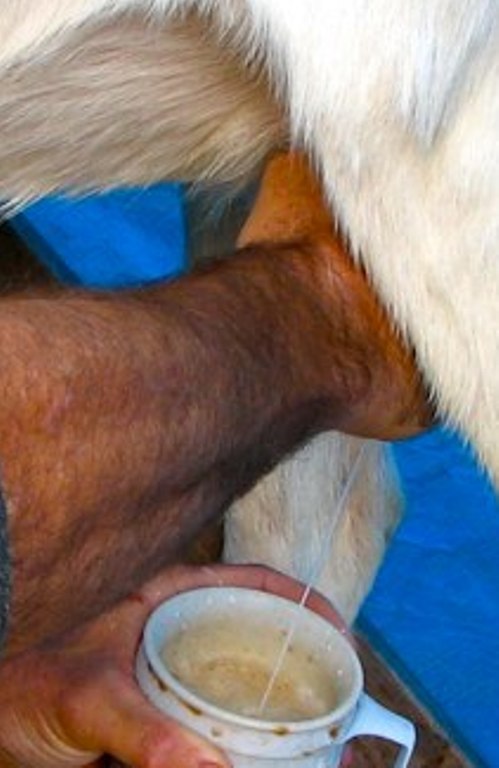
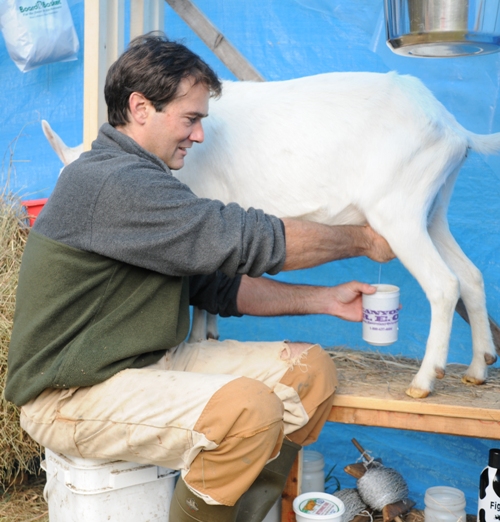
I like to milk in the morning. We have tried it several ways, but mornings work best for me. I generally get up, put coffee in the press to steep, go out and feed the chickens. When I come back in I have fresh coffee to take up to the field when I milk the goats. While I am there, it's nice to get a little extra milk, blood warm, and foam to boot. Heddar doe doesn't seem to mind.

20091012 Panorama Milkhouse

And if I am lucky, I get a few minutes to sit and enjoy the view from the milk house.

Labels: ,

Saturday, September 12, 2009

Field Milkhouse


That's our field milk house.

For a while in the spring I was walking the does up and down from the backfield to the barn for milkings. It was a pain, and invited disaster. It was a time consuming, we had to go by plants the goats liked but we didn't want them to eat and there was opportunity for mishap at every turn. There is a better way.

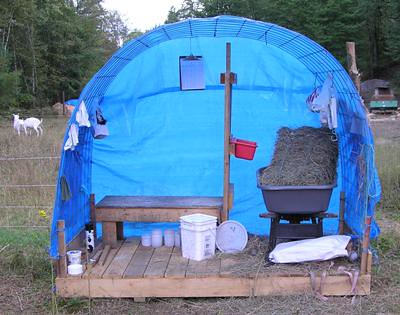
So I brought the milking stanchion up to the backfield and put it under a tarp covered stock panel arch. It gave me a place to hang the scale, store milking supplies and keep everything dry.

To improve on that, I built the field milk house. It's a hemlock deck (locally sawn, hemlocks the best choice available from my rough sawn guy). It has uprights for attaching the arch and is built on skids so I can pick up the whole thing on my loader forks, carry it to a new location and set it down. The skids also keep the rest of it out of the dirt so it will last longer.

It is certainly nice bringing the house to the animals instead of the other way around. Much faster and more productive. And it gives me a dry place to store nik nacs in the field. I moved it this afternoon for the first time. As advertised, slid under it with the forks, lift and carry.

Labels: , , , ,

Sunday, May 04, 2008

What Love Looks like


This is what love lookes like. It starts at six times a day (at least a couple of them in the wee hours) warming bottles of milk and heading out to the kids. And to have the milk to warm means milking. That's only twice a day, but for us that means Six AM milkings. The first couple of nights, I just slept out in the barn with the kids. Sleeping with the kids reminds me of my two year old son. Sometimes he wakes up in the middle of the night and since he is awake, we must be too. Climbing on our heads, yelling in our ears, prying off our eye lids. The difference between my son and goat kids is hooves. Baby boys feet aren't sharp and hard. And Baby goats don't wear diapers, so when they pee, it soaks through your sleeping bag. Just a hypothetical , of course. Until it happens. And then, well, at least they will be well imprinted.


At least it is warm enough that I feel secure having them sleep in the goat shed with their mothers. Probably would have been fine all along, it is the end of April, after all. But Ruffles the Doe goat was a little gruff with the babies, particularly the buck kid that was not her's. And Sparky, well, she can be a little clutsy. For a goat, she's kind of addle minded... And, well, they will have a good imprint with humans now.


The Doe (on the right) can actually go right through the cattle panel, it's more of a suggestion to her. But she doesn't generally care to. The buckling, on the other hand, thinks nothing of going places he shouldn't. I was hoping the electric fence would be enough to keep him in, but alas, no, he needs a physical reminder, hence the plastic fence around the poly wire to keep him in the paddock.


This is the expanded Goat Shed. I added two more panels to the north side of the existing shed. The beauty of cattle panel structures, I suppose. We are adding three more paddocks so we can have more seperation in our rotational grazing. The north and south paddocks will be five strand new zealand style electric (high tensile smooth wire, permanent). the space in between is strung with three strands of poly wire, a plastic "temporary" fence. It carries the same current as the new zealand fence. Sparky has more than once told us it still packs a wallup. I touched it myself the other day. It's still "hot", but not as potent as the new zealand fence.


Labels: , , ,

Sunday, September 09, 2007

Making Chevre

Earlier, I talked about getting goats this year. We now have two Saanen dairy goats. We milk everyday getting about 3/4's of a gallon. The majority of the milk we drink. We also skim off some of the cream for ice cream, make yogurt and cheese. We have been making a simple farm cheese, just vinegar and lemon juice to form a curd, herbs and spices and drain the whey through a cheese cloth and eat. No culture or aging involved.

Recently, we tried making a cultured cheese, chevre. We used a recipe I found at Fias co farm, with culture and rennet from Dairy Connection . I did struggle a little bit with the rennet ratio. Apparently, there are different strengths of rennet out there. I ended up going with .72 ml of single strength DCI classic animal rennet (plus an ounce of cold, non chlorinated water) for my half gallon of milk.

After milking, I combined the diluted rennet, culture and the still warm 1/2 gallon of milk in a sterile stainless steal pan. Then the pan went into a well insulated cooler. We were trying to maintain an even 72 F for the culture for the following 18 hours.


The culture had worked over night awhen I checked the milk in the morning and found it had curded up nicely. I was a little relieved because the first batch had not setup and came out as a yogurt. That was the struggle with the rennet.


I ladled the curds into a double layer of cheese cloth lining a large colinder and the whey drained into a bowl underneath.


After most of the whey has drained off, we picked up the corners of the cheese cloth and tied them to make a bag and hung the bag under a pot lid. Then the bag hung in a tall pot for a couple of hours, drining the rest of the whey.


The cheese came out nicely. It has a tangy taste with a texture similar to cream cheese. It spread nicely on bread and crackers. I think I'll try some herbs in it next time. Definitely worth doing again.

Labels: , , ,